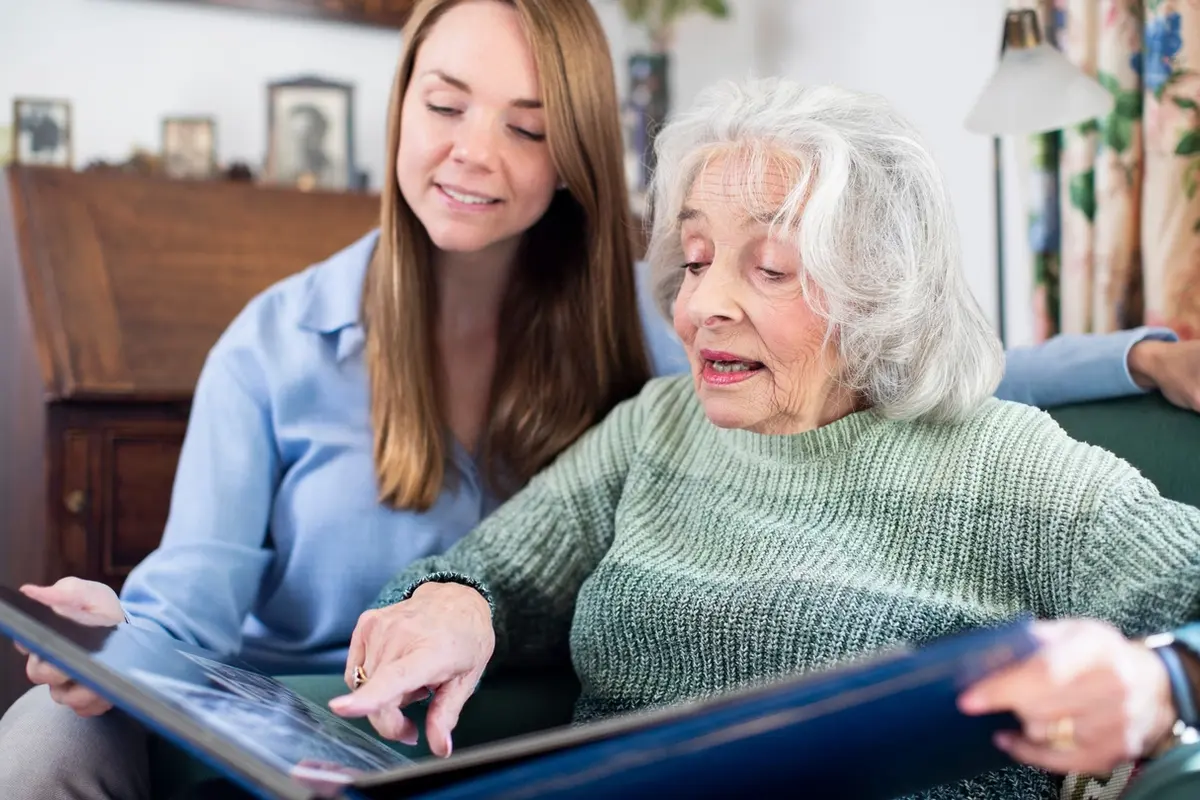

You want calmer evenings and better sleep for your loved one. Sundowning in seniors can make late afternoons hard. You see confusion rise. You see pacing, restlessness, or fear. The right plan helps. This guide explains what sundowning in seniors is, why it happens, and what you can do in Assisted Living or at home. It also shows how Sweetbriar Villa supports residents with steady routines and comforting spaces.
What is sundowning behavior?
Sundowning in seniors refers to an increase in confusion or behavioral symptoms that typically begins late in the day and persists into the night. Signs can include anxiety, agitation, irritability, yelling, wandering, hallucinations, and disrupted sleep. It is a cluster of symptoms linked to dementia, not a disease on its own.
Sundowning in seniors is observed across various types of dementia. It often overlaps with sleep problems and late-day fatigue. Families and care teams usually notice patterns over many days. You can track the time symptoms begin, the cues that precede them, and what helps them fade. National guidance offers practical steps that start with non-drug approaches.
How common is sundowning in seniors?
Prevalence varies because studies use different definitions and settings. Research reports a range from about 2.5% to 66% of people living with dementia. That wide range reflects differences in diagnosis, environment, and measurement methods.
Why does sundowning occur?
There is no single cause. Several factors interact.
- Circadian rhythm disruption. Dementia affects the brain’s clock. Changes in melatonin levels and exposure to light can disrupt sleep and timing, potentially leading to evening confusion.
- Light and shadow. Low light and shadows can distort depth and shapes, which can alarm a tired brain.
- Fatigue and overstimulation. A busy day can lead to sensory overload. Fatigue reduces one’s ability to cope late in the day.
- Medical contributors. Pain, urinary issues, sleep apnea, restless legs syndrome, infections, and medication side effects can exacerbate late-day symptoms. Check for these first.
- New or confusing environments. Changes in living arrangements, room changes, or inconsistent staffing can increase stress and trigger sundowning in seniors.
Clinicians group these symptoms under behavioral and psychological symptoms of dementia. Guidelines recommend nonpharmacological steps first, followed by the careful use of medications only when necessary.
Signs and patterns to watch
Sundowning in seniors often follows a daily arc. Track concrete details so you can intervene earlier.
- The symptoms typically begin, for example, between 4:30 and 7:30 PM.
- Triggers, for example, loud TV, hunger, glare, or a missed nap.
- Behaviors, for example, pacing, repeating questions, suspiciousness, calling out, or refusing care.
- What helps, for example, light snacks, hydration, soft music, a short walk, or a familiar photo album.
Write your observations on one page. Share it with your care team. Ask for adjustments based on this data.
What causes “sundowners syndrome”?
Families often ask what causes sundowners syndrome. The term describes evening behavioral spikes linked to dementia. Research points to a mix of brain changes, sleep disorders, circadian misalignment, mood symptoms, and environmental stressors. Studies show wide prevalence estimates because measurement tools and settings differ. Treatment plans work best when they combine environmental changes, routine, meaningful activity, and medications only when needed.
Practical steps you can take today
Start simple. Use changes with low risk and clear benefit. Many come from national dementia care guidance and caregiver tip sheets.
Stabilize the daily rhythm.
- Keep wake and bed times consistent, seven days a week.
- Serve meals and snacks at set times.
- Offer daylight exposure within the first two hours of waking. A 10 to 20-minute outdoor walk helps.
Adjust the late afternoon.
- Increase indoor light from 3 PM onward. Close blinds after dark to reduce reflections.
- Lower noise. Turn off the news. Choose calm music or familiar shows.
- Offer a light, protein-rich snack that also provides hydration at the same time each day.
Cut common triggers
- Avoid caffeine after noon.
- Limit long naps late in the day.
- Check for pain and bathroom needs before dinner.
- Keep the room uncluttered. Use high-contrast labels and clear pathways.
Use simple, familiar activities.
- Short, predictable tasks work well, for example, folding towels, sorting cards, or watering plants.
- Try a brief walk, chair stretches, or gentle range-of-motion exercises to get started.
- Keep sessions short, then rest. Repeat what works. Non-drug approaches are first-line.
Communicate to reduce fear.
- Approach from the front. Make eye contact.
- Use short sentences. Give one instruction at a time.
- Validate feelings. Reassure safety. Avoid arguing.
Consider light exposure, thoughtfully.
Bright-light therapy shows mixed evidence in the treatment of dementia. Some trials report benefits in sleep or behavior. Others find limited impact. You can still practice practical light hygiene, such as using brighter late-day indoor lighting and taking morning walks in natural light. Avoid expensive devices without clinician input.
Plan a steady evening routine.
Repeat the same steps in the same order. Keep it short and calm.
- Bathroom and handwashing.
- Warm washcloth and soft pajamas.
- Low-volume music or reading.
- Dim lights, then bedside lamp.
- Goodnight cue, the same words every night.
Safety Tips for Wandering and Night Waking.
Sundowning in seniors can include pacing and exit-seeking. Reduce risk with layered safety.
- Door alarms or chimes, as appropriate.
- Nightlights in hallways and bathrooms.
- Remove trip hazards.
- Keep ID on the resident.
- Supervised pacing is safer than restraint.
Medications should be used carefully.
No drug is approved specifically for sundowning in seniors. Clinicians may try short-term or targeted medications after non-drug steps fail. All have risks. Antipsychotics raise stroke and mortality risk in dementia. Revisit dosing often, and taper when possible. Discuss risks and benefits in detail with the physician.
How Assisted Care Supports Sundowning
A good community utilizes daily structure, effective environmental design, and trained teams to alleviate late-day symptoms. At Sweetbriar Villa, we center care on routine and comfort across Assisted Care and Memory Care. Residents benefit from predictable meal times, steady activity blocks, and familiar gathering spaces. Our team uses calm communication and checks for pain, hydration, and bathroom needs during the late afternoon. These steps can help reduce triggers that contribute to sundowning in seniors.
How Sweetbriar Villa put this into practice
Your loved one needs steady cues and trusted faces in the evening. Our teams follow simple, repeatable steps. We adjust lighting in common areas late in the day. We offer calm, familiar activities before dinner. We keep communication short and reassuring. We check for pain, bathroom needs, and hydration at set times. We listen to your insights and then update the plan together.
Read more about our approach to Memory Care and Assisted Care in Springfield. The daily rhythms and care features that align with best practices for sundowning in seniors.
Ready to talk with a local team that understands sundowning in seniors?
Frequently Asked Questions
1. What is sundowning behavior in dementia?
It is evening confusion with symptoms like agitation, anxiety, pacing, or hallucinations that start late afternoon and may last through the night. It is a symptom cluster, not a disease.
2. Why does sundowning occur?
Circadian rhythm disruption, low light and shadows, fatigue, medical issues, and unfamiliar environments can all contribute to late-day confusion and agitation.
3. What causes sundowning syndrome to worsen?
Unmanaged pain, infections, poor sleep, overstimulation, and inconsistent routines can intensify symptoms. Check and treat these causes first.
4. What helps reduce sundowning in seniors fast?
Increase light in the late afternoon, reduce noise, offer hydration and a snack, try a short walk, and then use a calm, repeatable bedtime routine.
5. Are medications used for sundowning?
Sometimes, after non-drug steps fail, all options have risks. Discuss the benefits and side effects with the clinician and review them regularly.